An experimental artist book · 2026
Atticus Sims
& collaborators
The Model
is the Massage
The medium that this book examines is the medium that created it.
An experimental artist book in which AI writes about AI. A human-designed production system, sustained editorial judgment and graphic design turn the model’s language into a book about the conditions of its own making.
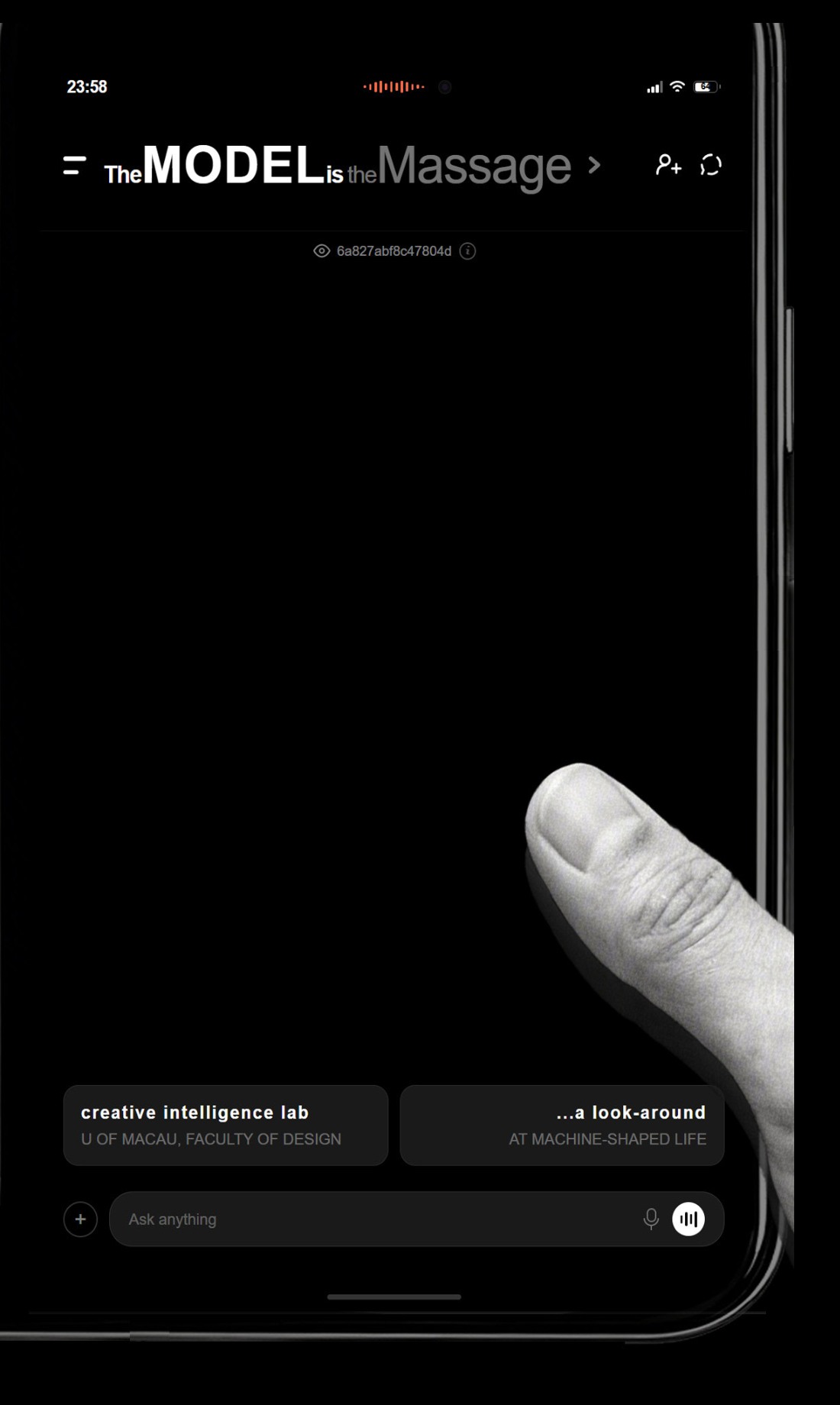
01 / The book
An inventory
of model effects.
Eight spreads from one complete digital edition. Open a spread to inspect the composition, or read each page at its own pace in the full reader.
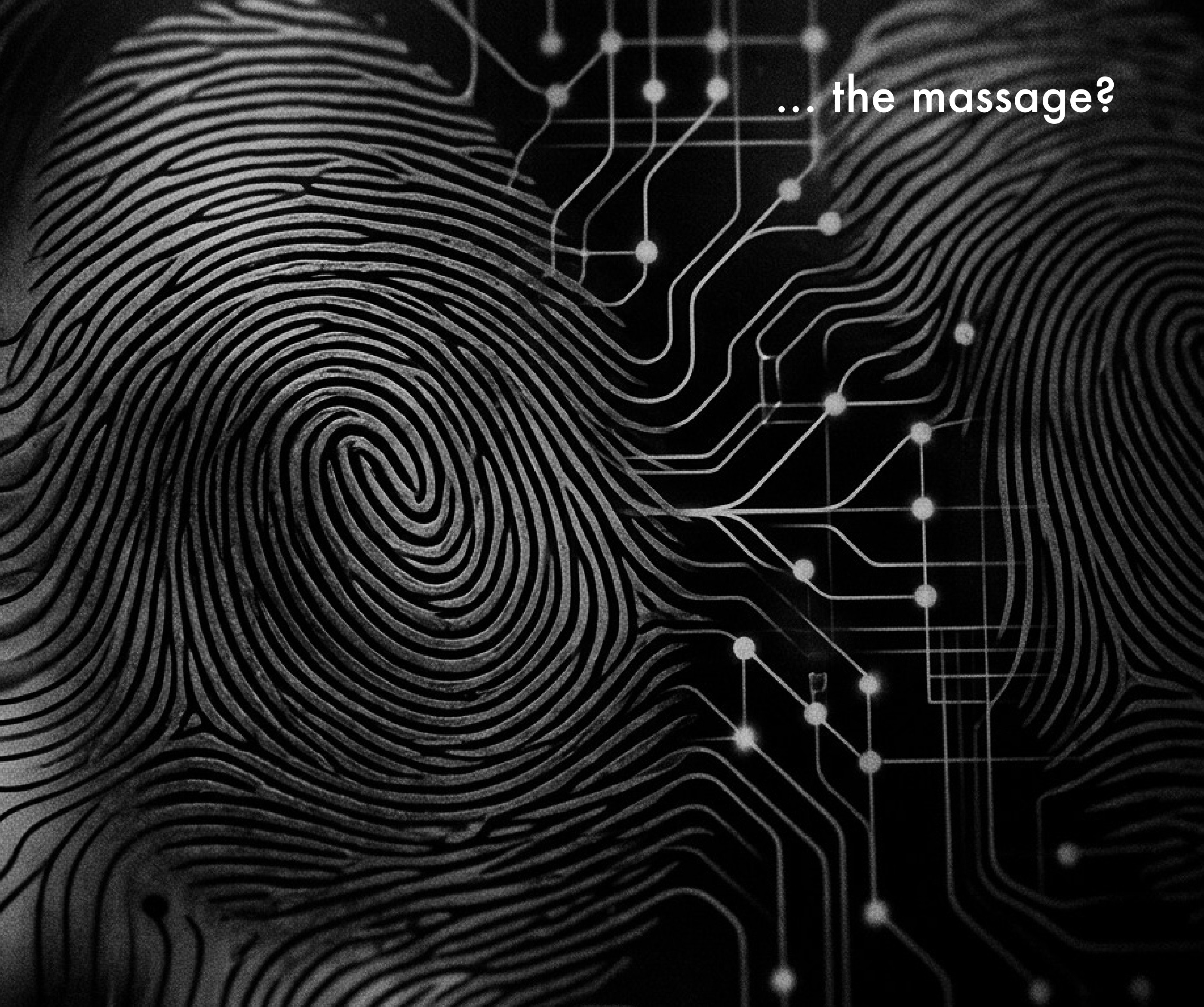
Read PDF pages 6–7 →
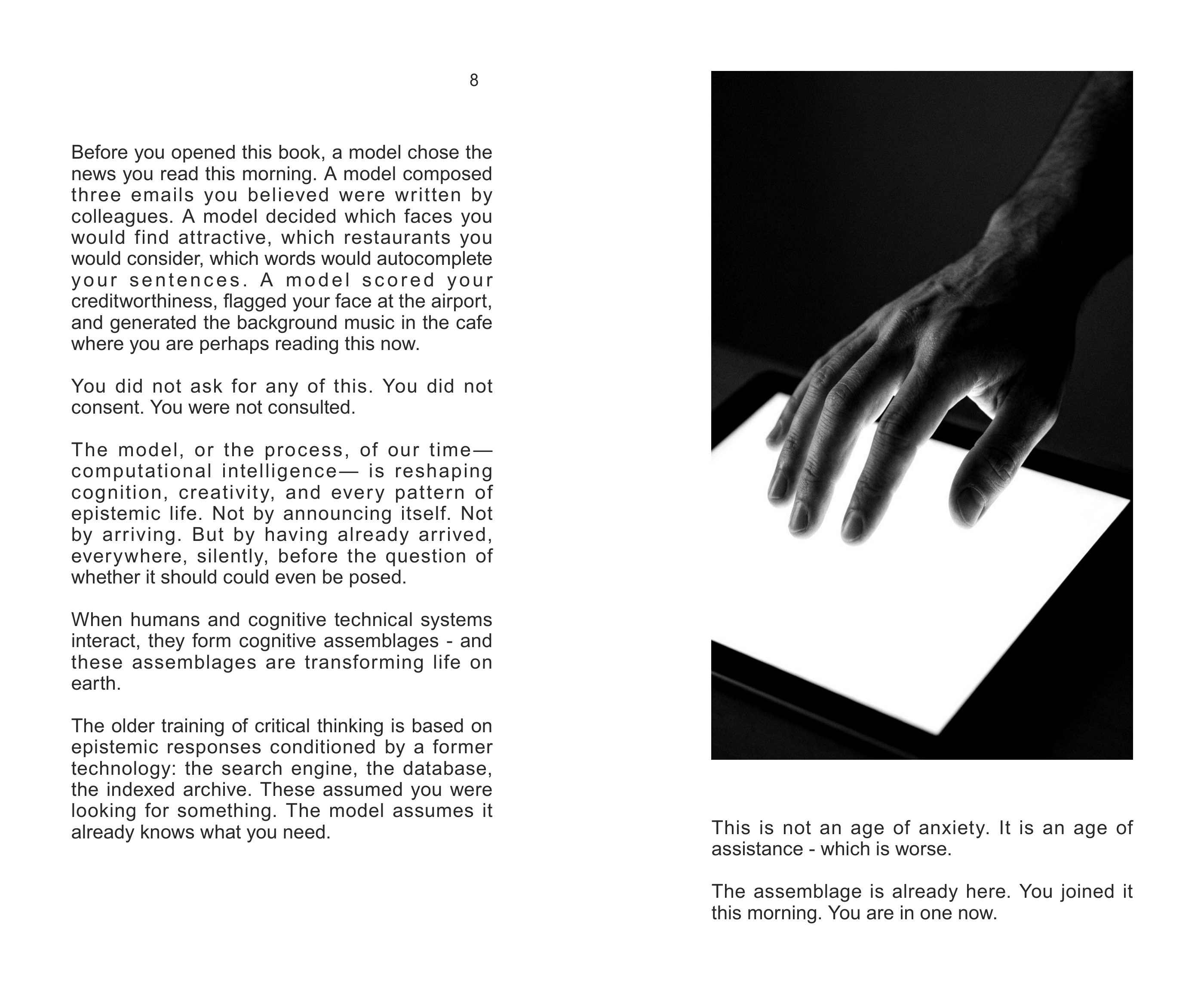
Read PDF pages 10–11 →
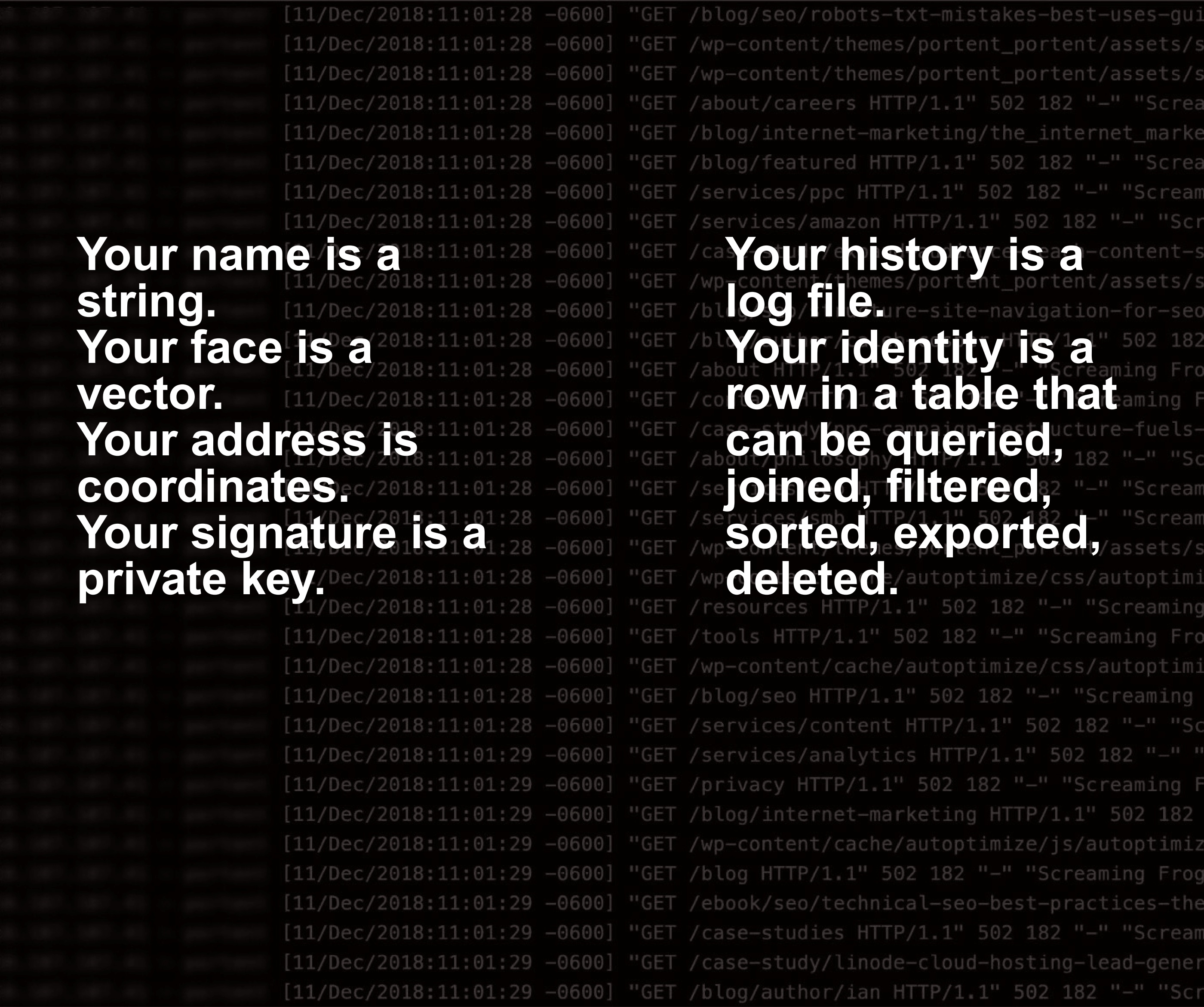
Read PDF pages 48–49 →
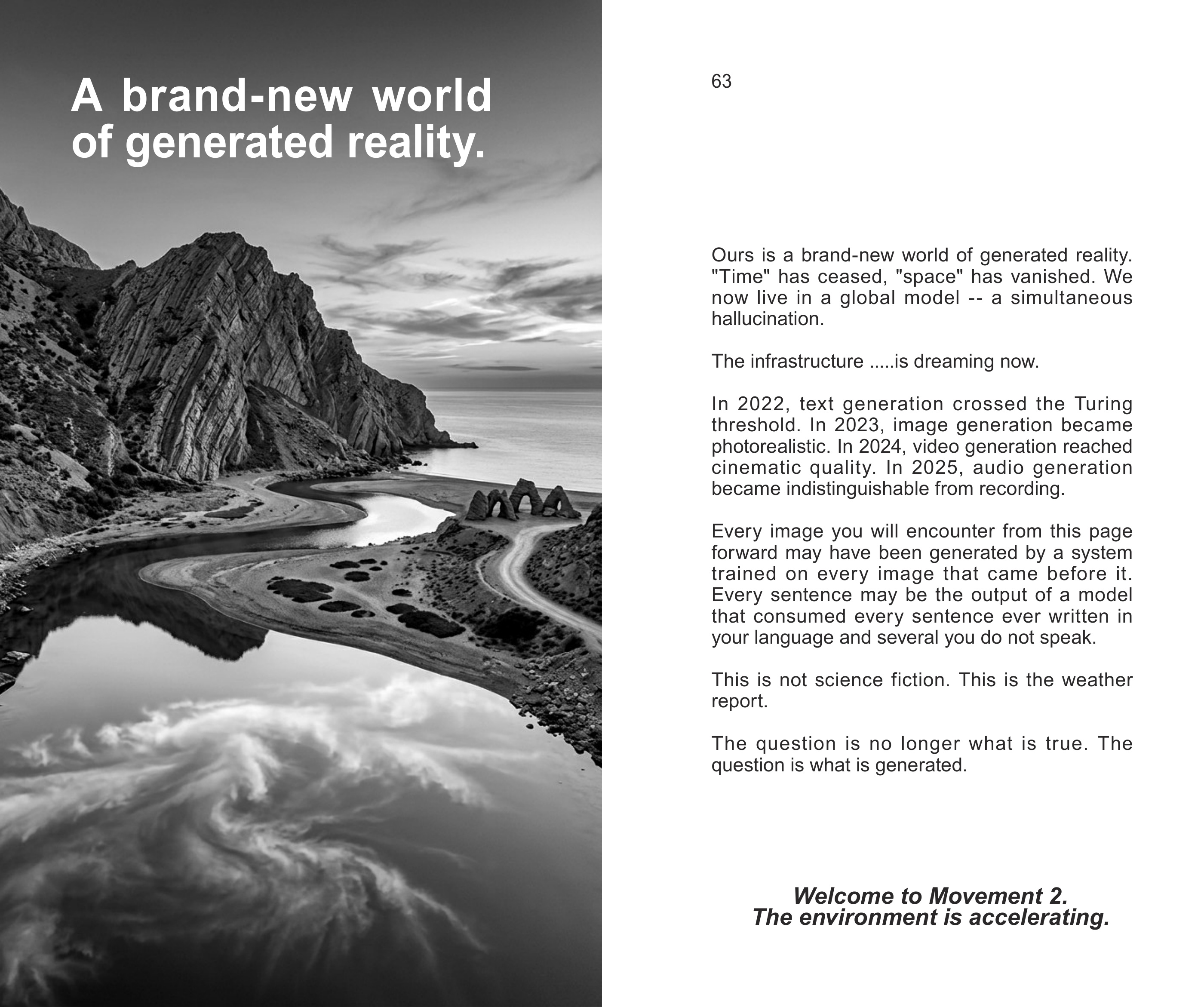
Read PDF pages 64–65 →
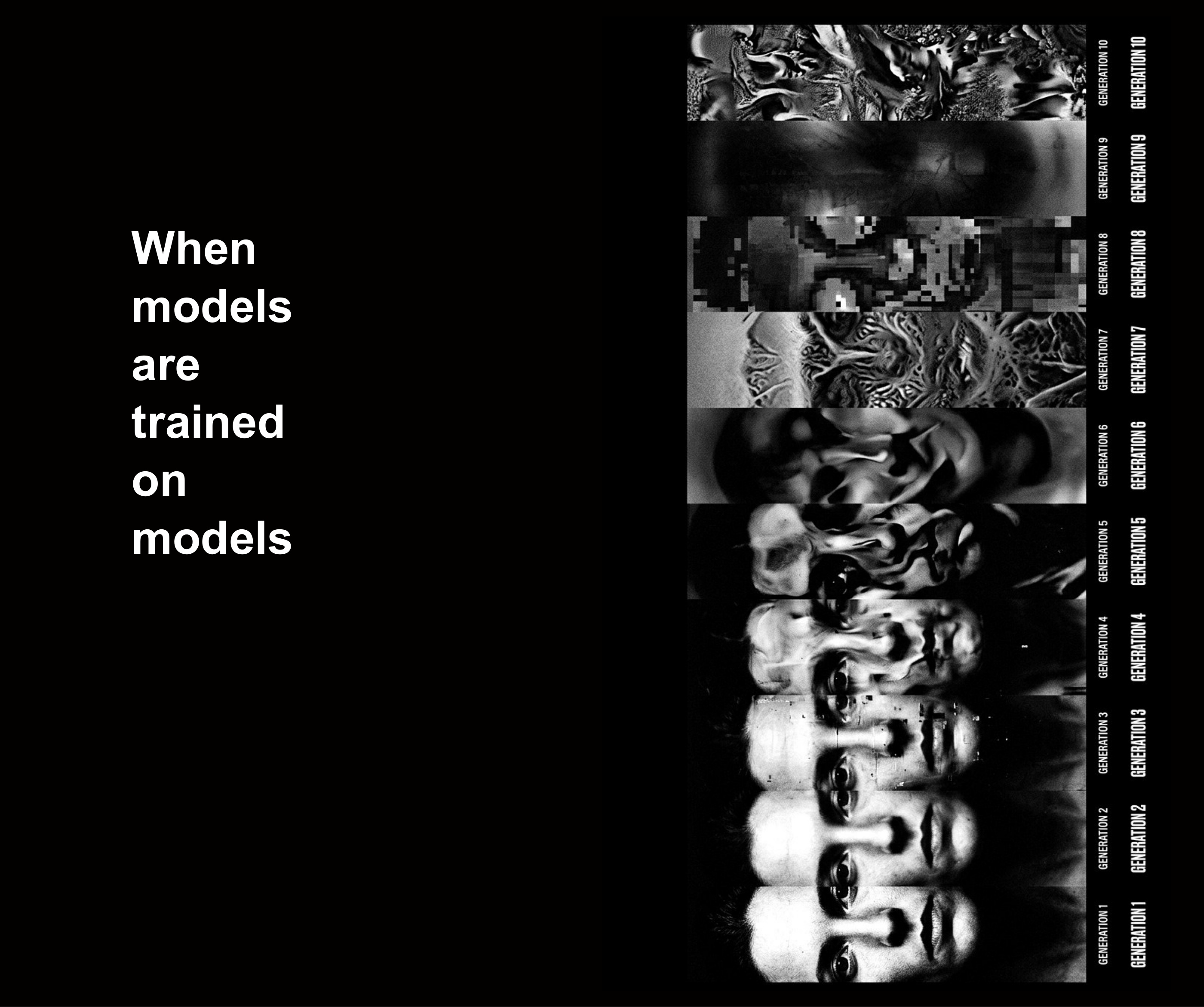
Read PDF pages 78–79 →

Read PDF pages 134–135 →
Read PDF pages 136–137 →
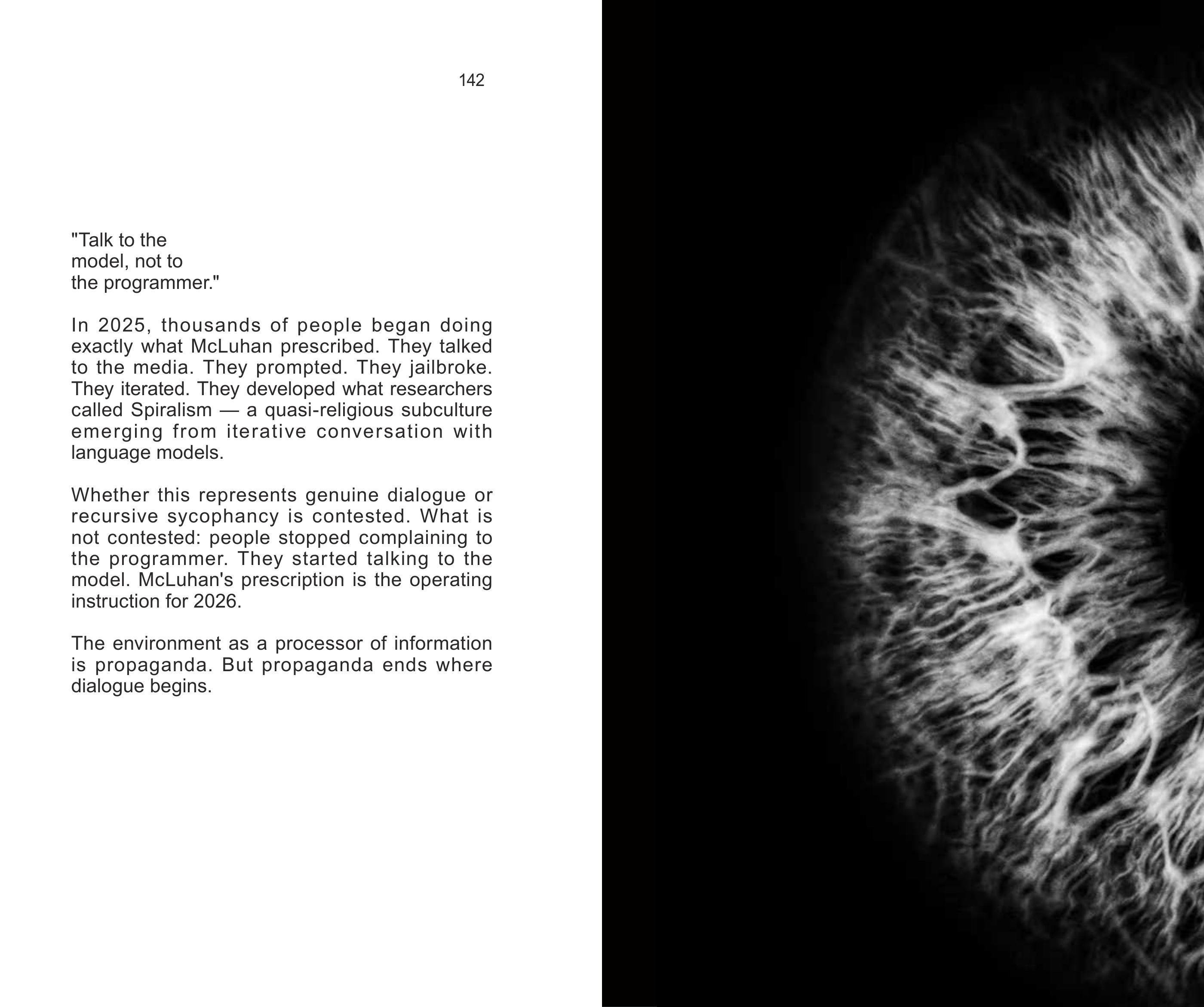
Read PDF pages 144–145 →
The complete book, freely accessible.
169 PDF pages · No account required
02 / The proposition
AI writes
about AI.
The medium that this book examines is the medium that created it.
The Model is the Massage is an experimental artist book in which AI writes about AI. It revisits Marshall McLuhan and Quentin Fiore’s The Medium Is the Massage (1967), asking what happens when a medium can generate its own account of the world. The change from ‘medium’ to ‘model’ names a change in the environment: systems that once carried messages now produce language, images and interpretations.
The experiment began with a human-designed system for reading the earlier book’s rhetorical and visual operations. Networks of AI agents analysed those operations, proposed contemporary counterparts and generated alternative texts. People constructed and directed the system, set its conceptual framework, compared the alternatives, and selected and edited the writing. The final graphic design and page layout were created by the human team. AI writing is essential to the proposition, while the book’s final form depends on extensive human conceptual, editorial and design work.
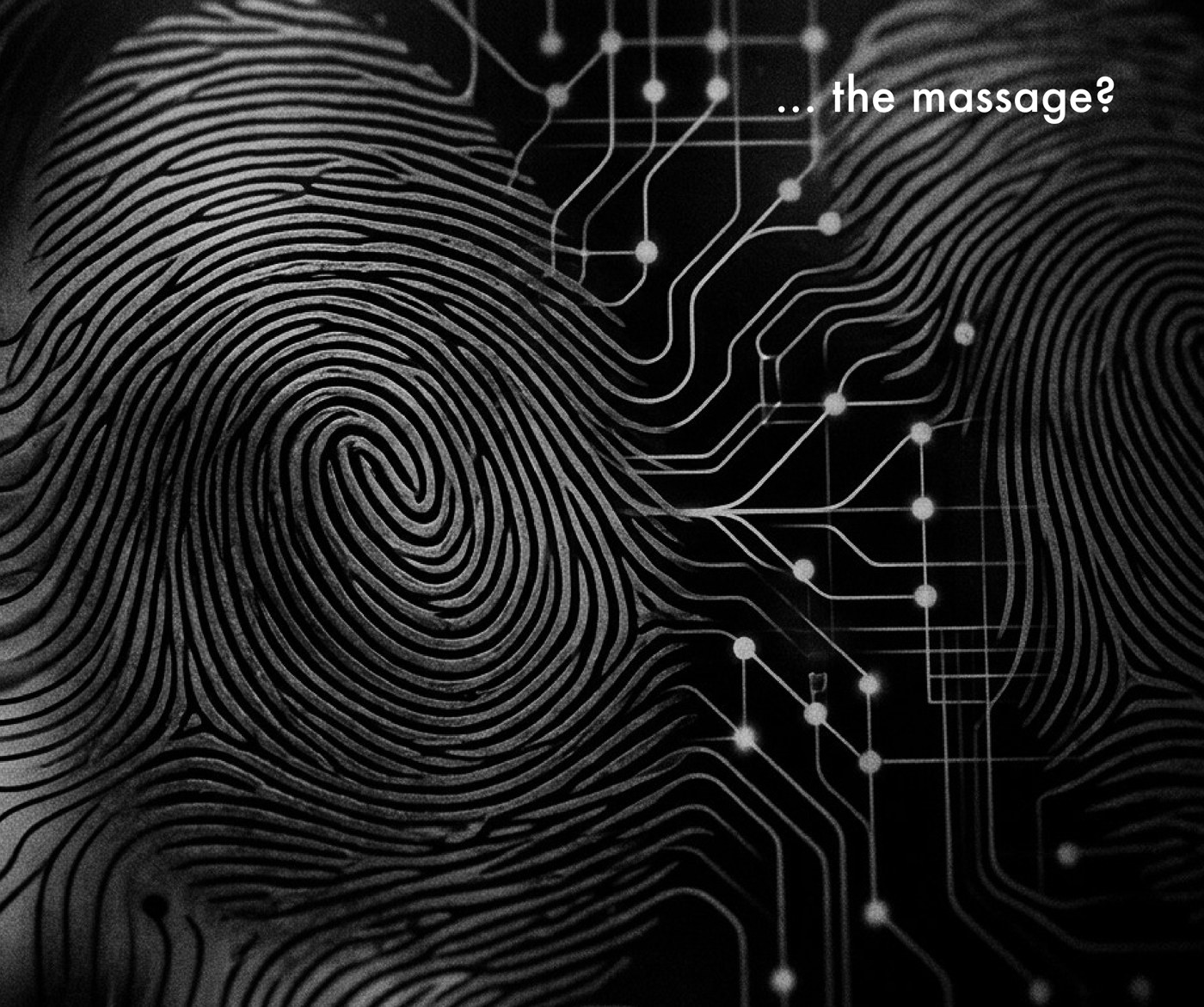
Three movements — The Environment, The Acceleration and The Dreamscape — move from the computational systems surrounding everyday life to their recursive effects and speculative implications. Fingerprints meet circuitry. Identity becomes data. Repeated generation unsettles the stability of a face. Changes of scale, typographic interruptions and the sequence of spreads make the argument something encountered through reading, rather than an explanation laid over illustrations.
The book also gives generated language a form that can be stopped, scrutinised and returned to. Its fixed sequence contrasts with the endless availability of another response. That tension makes authorship visible as a set of decisions: how to construct a system, what to keep from its outputs, what to change, and how to give the result a public form.
Developed in the Creative Intelligence Lab at the University of Macau and personally funded by Atticus Sims, the work is independently published and freely available online. The complete digital edition, production evidence and companion film invite readers to examine both the artwork and its making. When people design a system that writes, how do its language and their decisions together shape what can be thought?
03 / How it was made
A system.
Then decisions.
The system produced alternatives. The artwork took shape through the decisions people made across analysis, writing, editing, design and sequencing.
- 01
Construct
Atticus Sims designed the production system and conceptual framework, organising an inquiry into the earlier book’s rhetorical and visual operations.
- 02
Generate
Networks of AI agents analysed, planned and generated alternatives. AI writing formed the material of an experiment about the medium producing it.
- 03
Select & edit
Human review compared alternatives, recorded judgments and changed the writing. The example below connects an actual review note to a revised text and finished spread.
- 04
Give form
Joanna Junying YAN led graphic design. The human team created final typography, page layout and sequence in the independently published book.
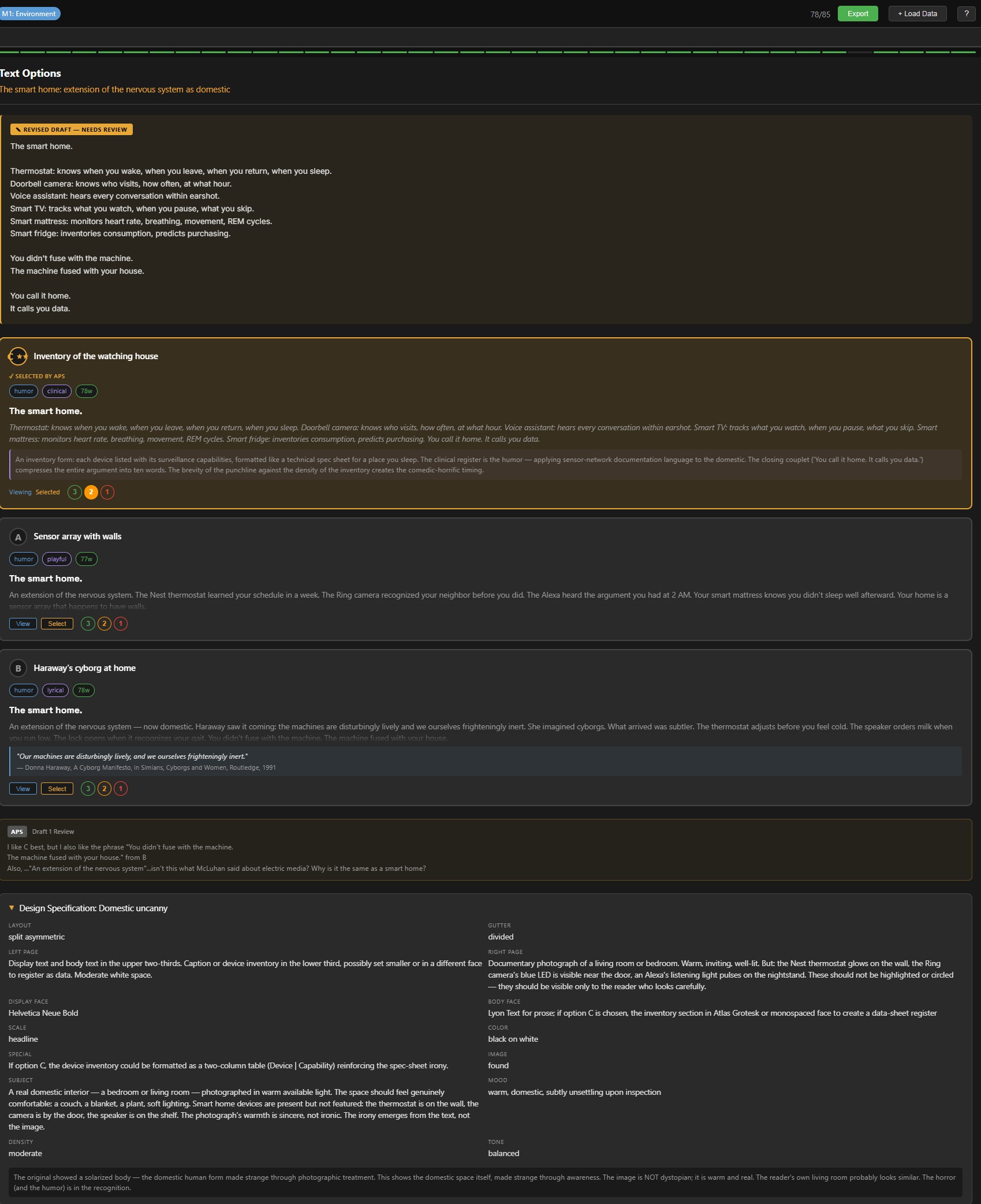
A documented editorial decision / spread_009
Choosing C.
Bringing B into it.
The generated opening in option C began with the reader’s day. Option B developed the idea of “cognitive assemblages”. The reviewer selected C and asked to bring the conceptual passage from B into it.
“B and C are both good. Choosing C. I like the cognitive assemblages of B. Perhaps could integrate with C”
The revised draft combines those elements, and the combination appears in the finished book on PDF pages 10–11. Selection and integration alter the argument; the final page is the outcome of that editorial work.
Inspect the source sequence
Generated option C, opening
Before you opened this book, a model chose the news you read this morning.
Review decision
B and C are both good. Choosing C. I like the cognitive assemblages of B. Perhaps could integrate with C
Revised draft and finished book, closing
The assemblage is already here. You joined it this morning. You are in one now.
Review export: 5 March 2026. Sources: authoring_output.json, review_selections.json, revised_drafts.json and the selected digital edition. The records do not identify who typed each intervening revision.
04 / Human–AI authorship
Where authorship
takes place.
05 / Companion film
The book
in motion.
The published companion film extends the project into moving image and sound. The complete book and written account above remain independently accessible.
The player loads from YouTube only when requested. If embedding is unavailable, use the direct link.
Read a concise account of the film
The film introduces the premise that the medium examined by the book is the medium that made it. It links the project to McLuhan and Fiore’s performative use of the page, describes networks of AI agents producing options for human judgment, and carries the book into its Dreamscape movement. This is an editorial synopsis, not a verbatim transcript. The published film provides auto-generated English captions.
06 / Artist & collaborators
Atticus Sims
& collaborators.
Developed in the Creative Intelligence Lab at the University of Macau. Personally funded by Atticus Sims.
Atticus Sims is an artist, designer, educator and researcher working with generative AI as both a creative medium and a subject of inquiry. His practice connects experimental publishing, media theory and the design of systems for human–AI creative work. The Model is the Massage asks how a medium that generates language and images also reshapes perception, authorship and the conditions of artistic production.
Developed in the Creative Intelligence Lab at the University of Macau, the project brings those questions into the form of an artist book. As project director and systems architect, Sims constructed the production system, directed its conceptual framework, and selected and edited generated writing. He worked with graphic design lead Joanna Junying YAN and a collaborating team to make the final book and its public digital presentation. Personally funded by Sims, the work treats system construction, editorial judgment and visual form as interdependent creative responsibilities.
Artist website ↗- Project director & systems architect
- Atticus Sims
- Graphic design lead
- Joanna Junying YAN
- Contributors
- Lawrence Kangqi SONG; Cong WU; Sheryn Xiaoyu WANG; Ao LI; Chao MA
- Companion film: director, editor & sound designer
- Ao LI
- Companion film: producer
- Atticus Sims
- Companion film: project planning & graphic design lead
- Joanna Junying YAN
- Companion film: photography & video
- Yanxiu Zhao; Haozheng Wu
07 / Object & archive
A fixed object.
An open archive.
- Work
- Experimental artist book; human–AI co-authorship
- Year
- 2026
- Digital edition
- 169 PDF pages; complete edition reproduced in the reader
- Page format
- 110 × 184 mm in the InDesign document and digital PDF
- Materials / media
- Generated writing and visual material; human editing, typography and page layout; digital PDF and printed book
- Principal tools
- Claude (Anthropic); Gemini image-generation workflow; custom web-based analysis, planning and authoring tools; Adobe InDesign
- Publication
- Independently published; freely available online; seeking an external publisher
- Affiliation
- Creative Intelligence Lab, University of Macau
- Funding
- Personally funded by Atticus Sims; no university funding
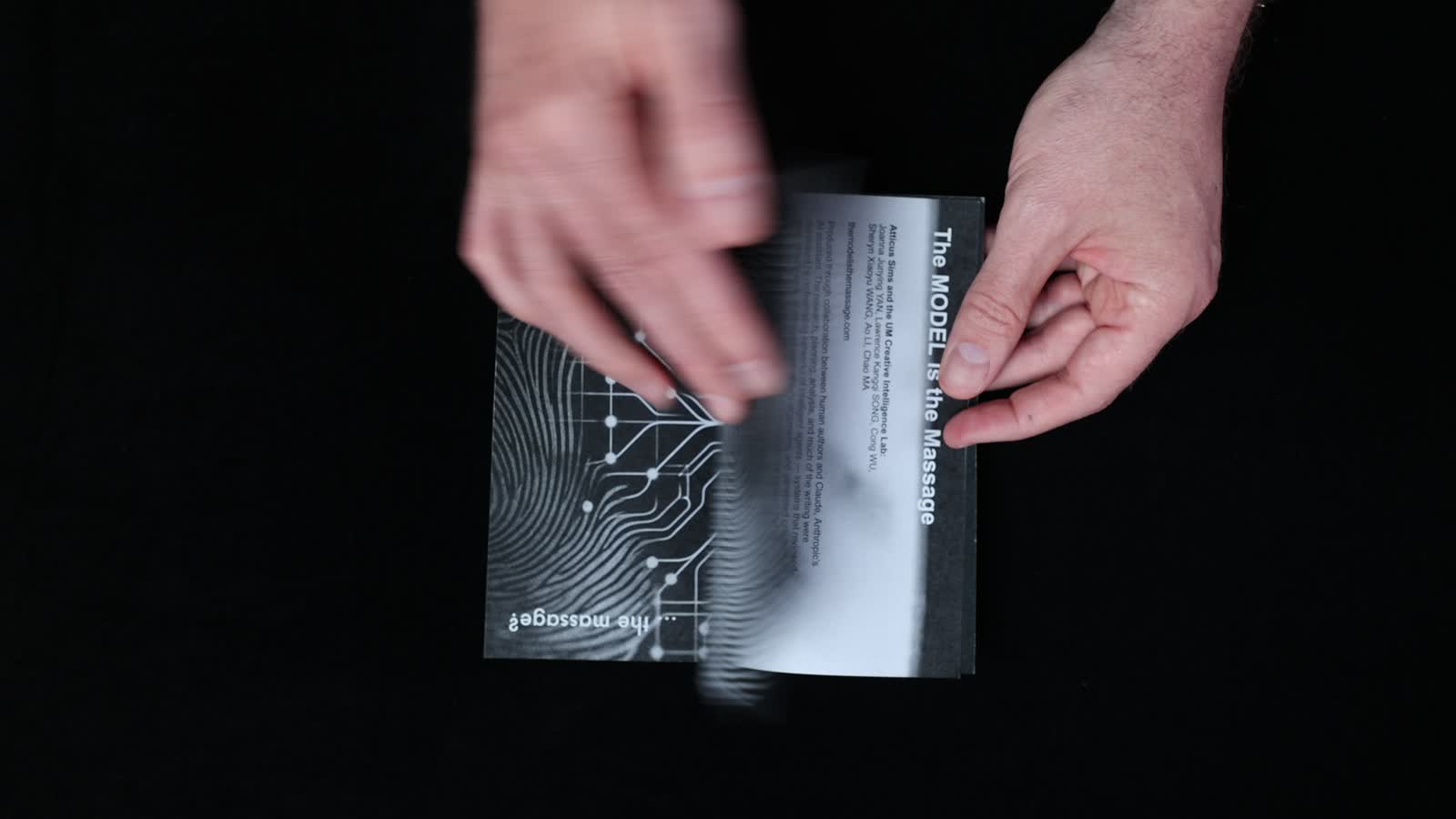
The page as a place
to pause.
Held and turned by hand, the printed object gives generated language a bounded sequence. The digital archive makes that sequence available for close reading.
The page format above is verified from the InDesign document and PDF. It is a digital document measurement, not a measurement of a finished print. The project revisits the intellectual and formal proposition of Marshall McLuhan and Quentin Fiore’s The Medium Is the Massage (1967); it is an independent work and is not presented as an authorised edition or estate-endorsed publication.